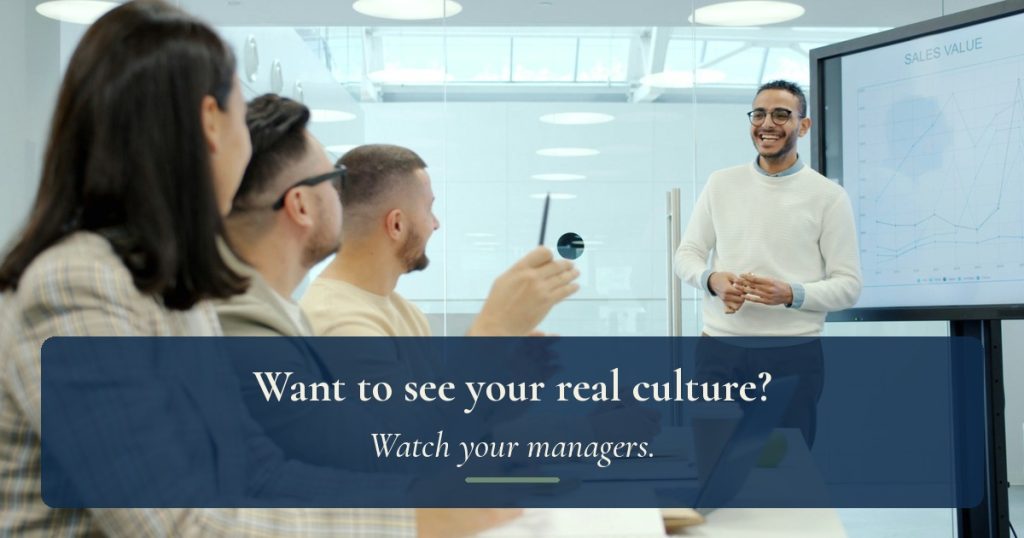
A manager presenting to a seated team, with the words: Want to see your real culture? Watch your managers.

Workplace Culture Strategy: Why Manager Development Needs to Start Before Burnout

Water Shepherd, MA, CCTP, EQ | Workplace Culture Strategist | Phoenix, AZ

Manager engagement fell from 31% in 2022 to 22% in 2025, while managers account for 70% of the variance in team engagement. This article looks at why manager development belongs in a workplace culture strategy for small and medium sized businesses, and what owners can examine before burnout makes the case for them.

I have been reading about businesses that invest in hiring, compensation, and employee benefits, yet leave the people responsible for managing their employees to figure out the management part on their own. Gallup’s State of the Global Workplace 2026 report caught my attention. Manager engagement fell from 31% in 2022 to 22% in 2025, while managers account for 70% of the variance in team engagement. For small and medium sized businesses, those numbers have real consequences for workplace culture and performance. If a business invests in finding good people and keeping them, isn’t the expectation that the people managing those employees would be equipped to do their jobs well?

What Happens When Managers Are Expected to Figure It Out?

When I work with leaders on workplace culture strategy, I pay attention to what happens between the leadership team and the people doing the work. How are decisions communicated? What happens when an employee needs feedback? How much authority does a manager actually have? Who steps in when a conversation becomes uncomfortable?

These everyday interactions tell me a great deal about how an organization operates. I see a recurring issue in the way businesses approach management. Someone performs well in their position, gets promoted into management, and is suddenly responsible for employee performance, communication, accountability, conflict resolution, and team engagement. The business expects a change in behavior without necessarily providing the development needed to support it.

Gallup reports that managers account for 70% of the variance in team engagement. That puts the manager’s daily behavior directly into the conversation about employee engagement drivers, retention, and business performance. Consider what employees experience when their manager rarely discusses expectations, avoids difficult conversations, or sends every decision back to the owner. Those behaviors affect how people communicate, make decisions, and approach their work.

Gallup also reports that employees who receive daily feedback from their manager are three times as likely to be engaged as employees who receive feedback once a year or less. Employees whose managers involve them in setting goals are nearly four times as likely to be engaged. These are everyday management practices. How many managers in your business have actually been shown how to do them?

Why Manager Development Needs to Happen Before Burnout

My understanding of this issue is that businesses often wait until a management problem becomes visible before investing in the person responsible for managing the team. By then, employees may have already adjusted their behavior around a manager who avoids accountability, communication has become inconsistent, and the owner is spending time handling issues that should be addressed within the management team.

Gallup’s research shows that manager engagement declined from 31% to 22% between 2022 and 2025. That is a substantial change in the engagement of the very people responsible for influencing everyone else’s experience at work.

I think about the timing of manager development quite a bit. A manager who is still learning how to lead people has an opportunity to build good management habits before those habits become workplace expectations. A manager who has spent two years avoiding difficult conversations, questioning their authority, or carrying responsibilities they were never prepared to handle has a different starting point.

Gallup recommends ongoing, individualized manager development that builds lasting capability. That makes sense to me. A one-time training session can introduce communication techniques or explain how to conduct a performance conversation. The manager still has to use those skills when an employee disagrees, a deadline is missed, or the owner challenges a decision.

This is where leadership development coaching becomes part of a workplace culture strategy. I approach development by looking at the situations managers actually face during their work week. What conversation are they avoiding? What decisions do they keep sending upward? How do they respond when someone challenges them? What happens to their communication when they are under pressure?

Those are the situations where management behavior becomes visible, and where development needs to take place.

The Owner’s Role in Building Effective Managers

I have also thought about the conditions owners create for their managers. A manager can attend training, learn how to communicate expectations, and practice making decisions. What happens when the owner reverses those decisions in front of employees? What happens when the manager is held accountable for results but has no authority to address the problems affecting those results?

The manager is working within a leadership system that may be making the job harder than it needs to be.

For a small business, this can become particularly expensive in terms of the owner’s time. Managers escalate decisions, employees go directly to the owner, and the owner becomes involved in conversations that should be happening elsewhere. The business may have several people with management titles while the actual decision making remains concentrated at the top.

Manager development has to include a conversation about authority, accountability, and leadership behavior. Owners need to be clear about which decisions managers can make, what results they are responsible for, and how disagreements will be handled. They also need to examine how their own responses under pressure affect the people managing their teams.

A manager cannot develop confidence in decision making when the rules change depending on the owner’s mood or the circumstances of the day. Employees see those inconsistencies, too. Over time, they learn whose decisions count, where to take their concerns, and which expectations are likely to change.

This is why workplace culture and performance are so closely connected to leadership behavior. The way leaders use authority, communicate expectations, and respond to problems becomes part of the organization’s operating culture.

What Should Business Owners Be Looking At?

When I think about how this affects your business, I would start by looking at the management team you have today. How many people are responsible for managing employees? When did you last have a conversation with each of them about how they are managing people? Do they have the authority to make the decisions you expect them to make? Do they receive feedback about their own management behavior?

I would also look at what happens when something goes wrong. Does the manager address the issue, or does it immediately move to the owner? Are employees comfortable raising concerns with their manager? Does the manager know how to respond when performance slips or expectations are not being met?

These questions tell you something about the relationship between organizational design, leadership effectiveness, and employee experience. They also help identify where management development needs to begin.

A business with forty employees does not need a complicated management structure to address these issues. The owner needs to understand what each manager is responsible for, where decision authority sits, and whether the people managing employees have the skills and support to do the job.

If you want a clearer read on where your managers stand today, you are welcome to start with my free Manager Readiness questionnaire, which takes about three minutes and offers a practical step you can try this week.

The takeaway

Your managers shape the daily experience of your employees. The way you develop, support, and hold those managers accountable becomes part of your workplace culture.

A More Useful Question for Leaders

A more useful question for leaders is what your managers need to do their jobs well, and whether the business has given them the conditions to do it.

When I reflect on this, it strikes me that manager development is often treated as an expense to consider when a problem appears. I believe it belongs in the regular operating decisions of a business, alongside hiring, compensation, and workforce planning.

If you expect managers to improve employee engagement, address performance, retain good employees, and make sound decisions, you need to invest in how they manage people. That also means examining the leadership behaviors and organizational expectations that shape their decisions.

A workplace culture strategy should include manager development while managers are still engaged and before employees begin adjusting to poor management as part of their everyday experience.

If you manage managers, I invite you to join my free online briefing, Running on Empty: Managers and Burnout, on Wednesday, November 18, from 2:00 to 3:00 pm Arizona time.

Register for Running on Empty: Managers and Burnout

Frequently Asked Questions

Why does manager development matter for small business culture?

Managers account for 70% of the variance in team engagement, according to Gallup. In a small business, management behavior has a direct effect on communication, accountability, employee experience, and the owner’s ability to stay focused on running the business.

What is the difference between manager training and manager development?

Training introduces information and management techniques. Manager development involves ongoing work that helps managers apply those skills to actual workplace situations, receive feedback, and build consistent management habits.

When should a business invest in manager development?

Businesses should invest while managers are learning their roles and before disengagement and burnout affect their teams. Waiting until employees begin leaving or management problems reach the owner makes the work harder.

How does leadership behavior affect employee engagement?

Leadership behavior shapes what employees experience every day. Communication, feedback, decision making, accountability, and the way managers respond to problems all influence how employees approach their work and interact with the organization.

How can I find out what my employees are experiencing right now?

My free, three-minute Culture Pulse Check is a starting point for reflecting on communication, trust, accountability, and the everyday experience of working in your organization.

An Invitation

You are invited to take the three minute Culture Pulse Check and see what you discover.

Sources

Gallup, Leaders: Improve Employee Engagement and Company Culture.

Gallup, State of the Global Workplace.

Gallup, Managers Account for 70% of Variance in Employee Engagement.

Leave a Reply

Your email address will not be published. Required fields are marked *

Strategic Communication
& Conflict Navigation

Leaders learn practical strategies to address difficult conversations, reduce workplace friction, and create environments where communication is clear, direct, and productive.

Retention & Workforce Engagement Strategy

High turnover and disengagement are rarely individual problems. They are signals of deeper organizational dynamics. We work with leaders to identify the cultural and operational factors driving burnout, misalignment, and attrition. Leaders develop practical strategies to strengthen engagement, improve communication, and create a workplace where employees want to stay and contribute.

Resilient Leadership & Burnout Prevention

Prepare leaders to recognize early signs of burnout, manage pressure effectively, and create sustainable work environments that support long-term performance and well-being.

Psychological Safety
& Trust-Based Leadership

Human Culture Works partners with leaders and organizations ready to address the real conditions shaping workplace culture, leadership effectiveness, and employee experience. We engage directly with what is impacting performance, retention, and team stability, including burnout, disengagement, communication breakdowns, and cultural misalignment.

We work with executives, HR leaders, and management teams navigating growth, restructuring, workforce challenges, and evolving organizational demands. Our work supports companies that are ready to strengthen leadership, improve employee engagement, and build cultures that sustain performance over time.

Our best-fit partners are:

  • Values-driven leaders committed to accountable and effective leadership
  • Organizations focused on long-term workplace culture transformation and workforce performance
  • Teams willing to examine challenges, strengthen alignment, and improve how work is experienced across the organization

When organizations are ready to go deeper, we design targeted strategies that improve employee engagement, strengthen resilience, and support sustainable business performance.

Next-Generation
Leader Development

Human Culture Works partners with leaders and organizations ready to address the real conditions shaping workplace culture, leadership effectiveness, and employee experience. We engage directly with what is impacting performance, retention, and team stability, including burnout, disengagement, communication breakdowns, and cultural misalignment.

We work with executives, HR leaders, and management teams navigating growth, restructuring, workforce challenges, and evolving organizational demands. Our work supports companies that are ready to strengthen leadership, improve employee engagement, and build cultures that sustain performance over time.

Our best-fit partners are:

  • Values-driven leaders committed to accountable and effective leadership
  • Organizations focused on long-term workplace culture transformation and workforce performance
  • Teams willing to examine challenges, strengthen alignment, and improve how work is experienced across the organization

When organizations are ready to go deeper, we design targeted strategies that improve employee engagement, strengthen resilience, and support sustainable business performance.

Mindful Leadership Training

Develop leaders who lead with awareness, focus, and intentional action. This strengthens self-regulation, strategic thinking, and the ability to navigate pressure without reactive decision-making.

Leadership Retreats & Strategic Offsites

Facilitated retreats designed to strengthen leadership alignment, improve communication, and develop strategic clarity for the organization’s next phase of growth.

Leadership Decision-Making
& Critical Thinking

Strengthen leaders’ ability to analyze complex situations, make informed decisions, and guide teams with clarity and confidence.

Leadership Alignment & Culture Development

Work with leadership teams to align behaviors, expectations, and decision-making with the organization’s stated values, creating consistency between leadership actions and company culture.

High-Performance
Leadership &
Organizational Effectiveness

We help equip leaders with the skills needed to guide high-performing teams in complex and fast-moving environments. Leaders develop stronger emotional intelligence, communication, and strategic thinking skills that improve collaboration, reduce workplace friction, and strengthen overall organizational performance.

Executive Leadership & Culture Transformation

This engagement works directly with executive teams to align leadership behavior with the organization’s values, strategy, and culture goals. Through facilitated workshops, leadership coaching, and strategic advisory, leaders strengthen communication, accountability, and decision-making. The result is a more cohesive leadership team that sets a clear cultural tone across the organization.

Executive
Leadership Coaching

Confidential one-on-one coaching designed to strengthen decision-making, emotional intelligence, and leadership presence. Executives gain greater clarity, resilience, and the ability to lead teams through complexity and change.

Emotional Intelligence
for Leaders

Equip leaders with the skills to manage emotions, build trust, and communicate effectively. This training improves team dynamics, reduces conflict, and strengthens leadership influence.

Change Leadership & Organizational Adaptability

Equip leaders with the tools to guide teams through organizational change while maintaining engagement, trust, and operational stability.

Transformative Workshops

Our virtual and in-person workshops equip leaders and teams with the skills to thrive. We focus on topics such as mindfulness, emotional intelligence, stress management, work/life balance, and more, helping employees reduce stress, strengthen communication, and build resilience. We always tailor our programs specifically to your organization and the needs of your people. 

Psychological Safety

When people feel safe to speak up, take risks, and share ideas without fear of judgment, innovation and collaboration thrive. We help organizations build environments where trust, respect, and open communication are the norm—not the exception. Psychological safety is essential for retention, engagement, and sustainable performance.

Organizational
Culture Evaluation

Our workplace culture evaluations uncover the strengths and opportunities within your organization. By analyzing engagement, leadership, communication, and well-being, we provide actionable insights to reduce friction, boost productivity, and create a thriving, aligned workplace where employees feel connected and motivated.

Organizational
Behavioral Change

We help organizations build thriving workplaces that support mental, emotional, and physical well-being. Through mindful leadership development and tailored wellness programs, we strengthen leaders, connect teams, and drive engagement, resilience, and long-term organizational success.

Mergers and Acquisitions

Successful mergers and acquisitions are much more than just about deal value. We help organizations navigate transitions with a focus on culture, trust, and alignment. We guide leaders in unifying teams, maintaining workforce stability, and preserving business performance, creating a shared future that actually works.

Generational Gaps

Workplaces now span five generations with different communication styles, values, and expectations. That’s untapped strength. We help organizations turn generational friction into collaboration by improving communication, aligning leadership approaches, and redefining what productivity and respect look like across age groups. The goal is to help every generation work together without losing what makes them distinct.

Emotional Intelligence

True leadership begins from within. We help individuals and organizations develop emotional intelligence and mindfulness to strengthen decision-making, communication, and resilience. By understanding emotions (their own and others’), and practicing presence, teams become more connected, adaptable, and effective in both everyday work and high-stakes situations.

Employee Engagement
and Retention

Keeping talent is about connection, purpose, and trust. We help organizations build workplaces where employees feel seen, heard, and valued. We align culture, communication, and leadership to create teams that remain motivated, productive, and loyal. Engagement is an ongoing experience that drives both human fulfillment and measurable business performance.

Crisis Management

A crisis isn’t just a disruption. It’s a pressure test of leadership, culture, and communication.  When it happens, we guide organizations to respond with clarity, empathy, and structure to protect trust, sustain well-being, and preserve long-term stability. From strategic planning to on-the-ground support, we ensure operational continuity while keeping every employee psychologically safe.

Corporate Social Responsibility

Human Culture Works partners with leaders and organizations ready to address the real conditions shaping workplace culture, leadership effectiveness, and employee experience. We engage directly with what is impacting performance, retention, and team stability, including burnout, disengagement, communication breakdowns, and cultural misalignment.

We work with executives, HR leaders, and management teams navigating growth, restructuring, workforce challenges, and evolving organizational demands. Our work supports companies that are ready to strengthen leadership, improve employee engagement, and build cultures that sustain performance over time.

Our best-fit partners are:

  • Values-driven leaders committed to accountable and effective leadership
  • Organizations focused on long-term workplace culture transformation and workforce performance
  • Teams willing to examine challenges, strengthen alignment, and improve how work is experienced across the organization

When organizations are ready to go deeper, we design targeted strategies that improve employee engagement, strengthen resilience, and support sustainable business performance.

Burnout Prevention

Burnout is a signal that something in the system isn’t working. We help organizations pinpoint stress points, redesign workloads, and build cultures where well-being, resilience, and performance coexist. Preventing burnout keeps your teams engaged, healthy, and able to deliver their best work without sacrificing themselves or results.

AI and Automation

In the age of AI, automation, and algorithmic efficiency, the intelligence that drives real breakthroughs is human. Mindfulness, emotional intelligence, and relational awareness are what create resilient teams, inspired solutions, and high-performing cultures. We help organizations integrate emotional intelligence with AI-powered insights to measure, manage, and scale human connection to strengthen engagement, optimize performance, and generate ROI while building a thriving workplace culture.

Who We Work With

Human Culture Works partners with leaders and organizations ready to address the real conditions shaping workplace culture, leadership effectiveness, and employee experience. We engage directly with what is impacting performance, retention, and team stability, including burnout, disengagement, communication breakdowns, and cultural misalignment.

We work with executives, HR leaders, and management teams navigating growth, restructuring, workforce challenges, and evolving organizational demands. Our work supports companies that are ready to strengthen leadership, improve employee engagement, and build cultures that sustain performance over time.

Our best-fit partners are:

  • Values-driven leaders committed to accountable and effective leadership
  • Organizations focused on long-term workplace culture transformation and workforce performance
  • Teams willing to examine challenges, strengthen alignment, and improve how work is experienced across the organization

When organizations are ready to go deeper, we design targeted strategies that improve employee engagement, strengthen resilience, and support sustainable business performance.

Our Goals

Human Culture Works partners with organizations to strengthen workplace culture, leadership capability, and employee well-being in ways that directly impact engagement, retention, and workforce performance. We focus on the conditions that shape how people experience work every day, including communication, leadership behavior, team dynamics, and organizational expectations.

Our work helps organizations:

  • Strengthen workplace culture and improve employee engagement
  • Improve communication and collaboration across teams
  • Support employee well-being and resilience in demanding work environments
  • Develop leadership capability, decision making, and interpersonal effectiveness
  • Build environments where employees feel respected, valued, and motivated
  • Strengthen accountability, ownership, and professional growth
  • Align individual contribution with organizational goals and performance expectations
  • Create a culture of belonging, shared purpose, and commitment to the mission

Organizations that invest in workplace culture, leadership development, and employee well-being see measurable improvements in retention, productivity, and long-term organizational performance.

What We Do

Human Culture Works partners with organizations to improve workplace culture, leadership effectiveness, and employee well-being in ways that directly impact performance, retention, and long-term business results. Our work focuses on the real conditions shaping the employee experience, including leadership behavior, team dynamics, communication patterns, and organizational expectations.

We design and deliver organizational transformation, leadership development, and workplace wellness strategies that reduce burnout, increase engagement, and strengthen workforce performance. Our approach is grounded in behavioral science and evidence-informed practices, supporting leaders and employees at every level of the organization.

Executives engage with us to strengthen culture, stabilize teams, and improve productivity across the workforce. Through culture strategy, leadership training, workforce development, and structured wellness initiatives, we help organizations build resilient teams, improve communication, and create environments where employees stay focused, motivated, and committed to the mission.

Our Philosophy

We place people at the center of workplace strategy, aligning leadership, culture, and employee experience to drive performance, engagement, and retention. Our approach integrates behavioral science, leadership development, and employee wellness to strengthen how work is experienced across the organization.